
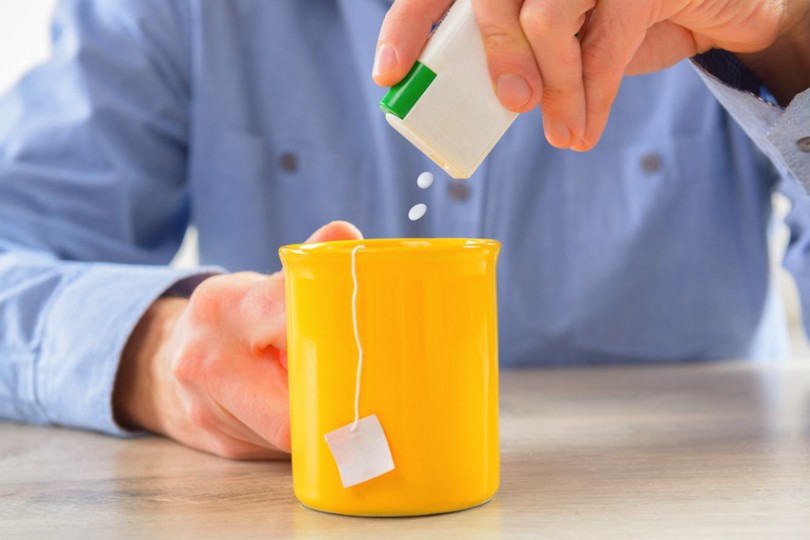
What are Sweeteners?
Sweeteners are substances produced as an alternative to sugar. They are sweeter than the same amount of sugar and contain less energy. There are many views on the effects of their use on human health. However, sweeteners, which have gained safe use areas by setting standards that will not negatively affect health, are widely used to balance calorie needs.
Why Are They Preferred?
These artificial, non-nutritive sweeteners, which replace sugar and provide a sweet taste, are used for weight control, blood glucose level management, and to prevent tooth decay. They are also preferred for controlling obesity and diabetes.
Where Are They Used?
Sweeteners are used in low-calorie beverages, dry mixes, chewing gum, gelatin, dessert mixes, puddings and fillings, frozen desserts, some yogurts, vitamin supplements, and cough syrups. Additionally, confectionery, biscuits, breakfast cereals, chocolates, mints, fruit drinks, low-calorie foods, baklava, jam, halvah, milk desserts, canned peas, carbonated beverages, chewing gum, fruit yogurts, ice cream, diabetic products, and sports drinks can also contain sweeteners.
Who Can Use Sweeteners?
People who are managing their weight, those on a weight-loss diet, and of course, diabetics. The use of sweeteners and products containing sweeteners provides great convenience in weight-loss programs, especially for individuals who are fond of sweet tastes and desserts. Studies show that people who use sweeteners and products containing them during and after weight-loss programs lose weight more easily and can maintain their weight more comfortably after the program.
Are They Harmful to Health?
Scientific studies conducted by many scientists and the European Food Safety Authority (EFSA) have concluded that sweeteners are safe for humans. Sweeteners are considered safe not only for adults but also for infants, children, and pregnant women. Aspartame, discovered in 1965 and approved for use by the U.S. Food and Drug Administration (FDA) in 1981, has been permitted for use in food and beverage products in over 100 countries worldwide. In addition to the FDA, research on the safety of Aspartame has been reviewed, and the sweetener has been deemed safe by other regulatory bodies around the world, including the Joint FAO/WHO Expert Committee on Food Additives (JECFA), the European Food Safety Authority (EFSA), and the Agence Française de Sécurité Sanitaire des Aliments (French Food Safety Agency – AFSSA).
Top 5 Most Common Sweeteners
- Aspartame: Discovered in 1965, Aspartame is 200 times sweeter than table sugar. While amino acids form protein structures, aspartic acid and phenylalanine are combined in a way that is perceived as sweet. These two amino acids are found naturally in meat, lean milk, fruits, and vegetables. When digested, our bodies treat them like other amino acids. Since its structure changes when heated, it is used in foods that do not require cooking. It can be found in products like puddings, gelatin, frozen desserts, hot cocoa mixes, powdered drinks, teas, breath mints, chewing gum, and tabletop sweeteners.
- Saccharin: Discovered in 1879, Saccharin has been used as a calorie-free sweetener for approximately 100 years. It is produced from a substance found naturally in grapes and is 300 times sweeter than table sugar. 20 mg of Saccharin provides the same sweetness as 1 teaspoon of table sugar. Since the body cannot break it down, Saccharin provides no energy and is excreted in the urine. When heated, Saccharin maintains its sweet taste, so it can be used in foods that require cooking.
- Acesulfame K: Discovered in 1967, Acesulfame K is a white, odorless, crystalline sweetener. It provides no calories. Like Saccharin, Acesulfame K cannot be broken down by the body and is excreted unchanged in the urine. It is 200 times sweeter than sugar. When used in high concentrations in some foods, it can leave a slight aftertaste. For this reason, it is often used in combination with other calorie-free and caloric sweeteners. Since its structure does not change when heated, Acesulfame K can be used in foods that require cooking. As it does not provide bulk like sugar, it is not used in certain recipes.
- Sucralose: Approved for use by Canada in 1991, Sucralose is known as the most recently developed sweetener. It is 600 times sweeter than sugar and is heat-resistant. It does not have a metallic aftertaste. It can undergo all types of heat treatment without its structure being altered. It is known as the sweetener with the taste closest to sugar. From a health perspective, it is stated that there is no harm in consuming foods and beverages prepared with calorie-free sweeteners.
- Stevia: The steviol glycoside components that give the Stevia plant its intense taste are 200 to 300 times sweeter than sugar. All studies on the safety, metabolism, and intake of pure steviol glycosides have shown their safety in all populations, including children, pregnant, and breastfeeding women. Steviol glycosides are obtained from stevia leaves through processes similar to those used for other natural products like vanilla, mint, and cinnamon. The Joint FAO/WHO Expert Committee on Food Additives (JECFA) has conducted a comprehensive scientific review of all available scientific data and concluded that the use of stevia sweeteners in food and beverages is safe.
Approved Sweeteners:
- Acesulfame (E 950)
- Aspartame (E 951)
- Aspartame-Acesulfame salt (E 962)
- Cyclamate (E 952)
- Neohesperidin (E 959)
- Neotame (E 961)
- Saccharin (E 954)
- Sucralose (E 955)
- Stevioside (E 960)
- Thaumatin (E 957)